How do designers describe their workshops?
We did not conduct interviews: this is a compilation, with sources, of what designers from Istanbul, New York and London have told other publications.
WyvOne Editör ·
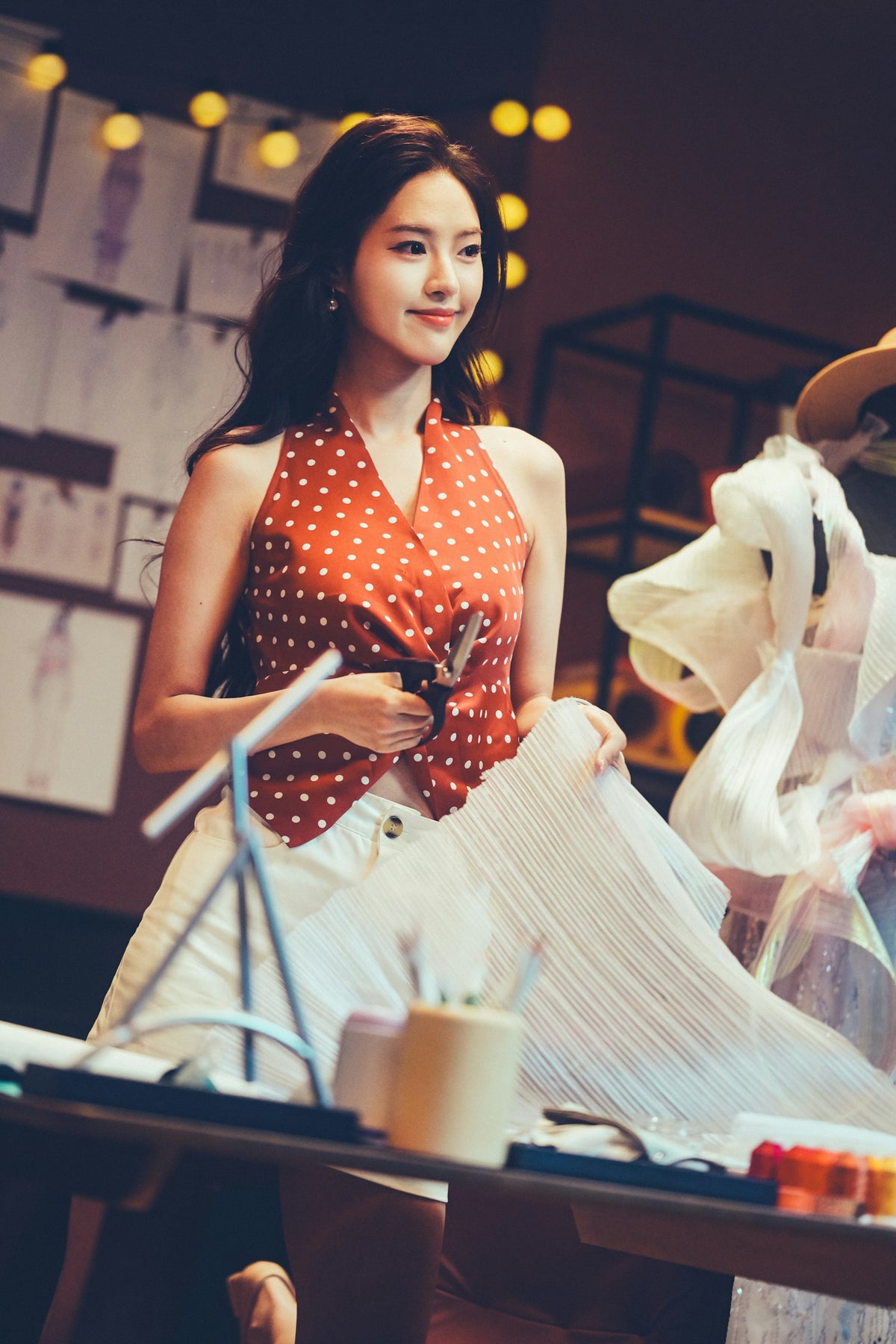
This is a compilation. WyvOne did not interview these designers. What follows is summarised, with sources, from interviews and profiles that have already appeared in other publications. We have retold their words in our own sentences; only one sentence appears in quotation marks, in our translation.
Istanbul: a small team, a long bond
Serli Keçoğlu appears in Idil Demirel's profile in Daily Sabah dated 16 June 2025. At Closh, which Keçoğlu founded, every piece starts as a hand-drawn sketch, and the designer slowly refines a design until it becomes what she wants. The team is small and close-knit; her mother and aunt are part of it. The article says the family has been sewing for generations, that the craftspeople in the workshop stay with the brand for a long time, and that this comes from shared values and mutual respect. During the pandemic the boutique on Atiye Street closed, and the workshop became a space for both working and selling; today the brand operates from a showroom on Abdi İpekçi Avenue.

In Demirel's profile of Mehmet Korkmaz, dated 24 June 2025, in the same newspaper, the scale is very different. Korkmaz opened his first workshop under his own name in his early twenties and put his earnings back into the brand. As a teenager he did every job in the workshop and rose to master level. He says his team has more than 40 people, and that he is involved in the whole process, from choosing fabric to sketching, handwork and final production. The brand ships to the Middle East, takes custom orders and also presents its collections in Dubai.
The interview with Gökay Gündoğdu, dated 25 May 2026 and also by Demirel, took place in his showroom in Istanbul. According to Gündoğdu, making women's labour and its role in production visible has always been important to him. The article gives no detail on how his workshop runs.
In a somewhat older source, Eric Brain's piece for Hypebeast from October 2021, the designers of KARMA by IMA say that Istanbul has many designers and textile workers, that the fashion audience does not commit to a single brand, and that it is hard to make room for yourself. Senem Kula, taking an approach that does not treat waste as waste, made a zero-waste collection from the cutting scraps of other collections.
New York: rent, fabric, publication
CULTURED's article by Sam Cummins, dated 4 September 2026, talks to three independent New York designers.
- Jacques Agbobly says the rent for his Brooklyn studio is about $3,000 a month. He says he tries not to cut corners on labour, materials or the people who make the product, and that he sets prices starting from cost. He advises new designers to find a business partner.
- Gabe Gordon designs together with his husband, Timothy Gibbons. The knitwear is hand-dyed and hand-woven in Brooklyn. Gordon says he will always spend money on better yarn and a better factory; for runway pieces they reuse yarns and materials, carrying part of one season into the next. His advice: document every part of the process.
- Connor McKnight runs his studio from his home in Brooklyn, where the rent is $3,500 a month. He says he also factors in the multiplier added on top of cost so he can sell in stores and at least not lose money; according to him most companies multiply by 2.5 at each tier, though the ratio can vary. He says he funds the brand with investors, loans, family, sponsorships and freelance work for large companies.
London: do it yourself, then build a team
In Hypebae's piece by Sylvia Shoshan, dated 24 February 2026, four London designers speak. George and Angus of AGRO STUDIO say they started without outside investment, made every piece with their own hands, and put money earned from other jobs into materials and equipment; their first customers were performers and private clients.
Masha Popova moved to Ukraine to produce her collection and set up a studio there; within a week of the digital presentation, stores such as Ssense and H. Lorenzo contacted her to buy the collection. According to Popova, doing it alone is almost impossible: ‘You need a community and a team; doing it on your own is almost impossible.’ (Translation ours.) Pauline Dujancourt names her garments after the women who work on the collection, and she now has a studio intern. Clara Chu says she founded her brand with £10,000 from an accessories prize.
What they have in common
The accounts come at different scales: a 40-person team, a home studio and a two-person collective are all here. What repeats in all of them is three items: the people who do the work, the money set aside for fabric and yarn, and fixed costs such as workshop rent. None of these publications fits its workshops into a single mould.
Sources
- Daily Sabah (Idil Demirel): From Nişantaşı to nation: Closh's lasting mark on Turkish fashion (16 June 2025)
- Daily Sabah (Idil Demirel): From market stalls to Mercedes-Benz: Rise of designer Mehmet Korkmaz (24 June 2025)
- Daily Sabah (Idil Demirel): Turkish designer Gökay Gündoğdu redefines fashion industry (25 May 2026)
- Hypebeast (Eric Brain): Istanbul's emerging designers (20 October 2021)
- CULTURED (Sam Cummins): What Does It Take to Make It as an Independent Fashion Designer in 2026? We Asked 3 of Them. (4 September 2026)
- Hypebae (Sylvia Shoshan): Four Emerging Designers Told Us What It Takes To Start a Brand in 2026 (24 February 2026)
Representative cover image: Sou Jest, Unsplash.


